
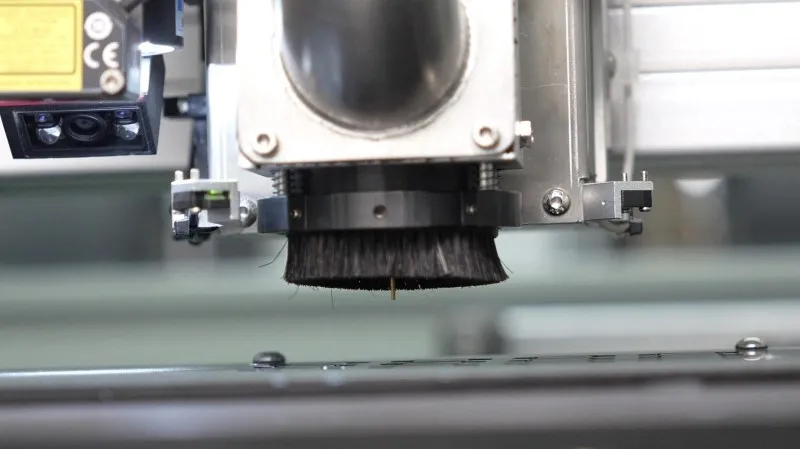
Router depaneling vs V-cut is a common debate in PCB manufacturing, especially when considering which method best fits high-density, high-reliability, or complex designs. While V-cut offers speed and simplicity for many applications, router board separation is often the more suitable choice for certain design complexities and reliability requirements. This article highlights when router depaneling is the better option over V-cut, focusing on real-world insights, user pain points, and practical applications shared by SEEZM-TEC customers.
🔍 Why the Debate Matters
Choosing between a router and V-cut depaneling comes down to product requirements. Each method has its strengths:
- V-cut is fast, efficient, and cost-effective for simple, high-volume designs.
- Router depaneling provides higher precision, better stress control, and flexibility for complex PCBs.
However, not every design can afford the limitations of V-cut. Here’s when router board separation is the best choice.
⚙️ When Router Depaneling Is the Right Choice
🟢 Complex Board Designs
Router depaneling is ideal for PCBs with intricate shapes, densely populated areas, or tight component-to-edge clearance. Unlike V-cut, which relies on pre-scored grooves, router systems can follow complex paths and handle:
- Irregular shapes
- Tight layouts
- Edge-mount components
🟢 Sensitive or Thin Materials
For thin or flexible PCBs, the mechanical force from V-cut can lead to microcracks, warping, or component displacement. Router depaneling, with its controlled cutting force, minimizes these risks. It’s particularly useful for:
- Flexible PCBs (FPCs)
- Thin FR4 boards
- High-density interconnect (HDI) boards
🟢 Higher Reliability Requirements
When reliability is paramount (automotive, medical, or industrial applications), router depaneling’s precision and minimal stress become more important than speed. It reduces:
- Cracked capacitors or traces
- Solder joint fatigue
- Post-depaneling defects
🧩 Common Pain Points Solved by Router Depaneling
Engineers often choose router depaneling over V-cut for several pain points:
- Inconsistent edge quality: V-cut sometimes causes burrs or damage near the score line, while routers produce smooth, uniform cuts.
- Stress-related defects: V-cut creates bending stress on the PCB during separation, which can cause component damage. Router depaneling spreads the force more evenly, avoiding these risks.
- Edge component integrity: In high-density designs, components placed too close to the edge are at risk of damage with V-cut. Router systems allow better control of the cutting path, ensuring minimal impact on edge components.
📉 Cost vs. Benefit: Router Depaneling vs. V-Cut
Router depaneling typically costs more than V-cut in terms of both equipment and operating costs. However, when assessing long-term costs:
- Reduced rework: Router depaneling reduces the need for post-production rework, which can be costly for high-reliability products.
- Improved yield: The precision and low stress associated with routers often lead to fewer defects, improving overall yield and product quality.
- Tooling: V-cut machines may be less expensive upfront, but router systems provide more long-term flexibility and precision, making them more versatile in handling complex designs and diverse materials.
🏭 Case Example: Medical Device PCBs (SEEZM-TEC Case Study)
A medical device manufacturer faced challenges with edge component damage and solder joint failures when using V-cut for flexible PCBs. After switching to SEEZM-TEC’s router depaneling system, the manufacturer saw:
- Zero damage to edge components
- Increased process stability across multi-shift operations
- Fewer failed boards during functional testing
The investment in router depaneling proved cost-effective by reducing scrap and improving reliability, which are critical for high-reliability industries like medical electronics.
🛠️ Practical Tips for Choosing Router Depaneling
- Evaluate design complexity: If your PCB has intricate shapes, edge components, or is densely populated, router depaneling is the better option.
- Consider material type: For flexible, thin, or sensitive PCBs, router depaneling reduces stress and the risk of cracking.
- Factor in reliability needs: High-reliability industries should choose router depaneling to ensure precision and prevent defects during depaneling.
- Assess long-term cost: While router depaneling may have higher upfront costs, its potential to reduce rework, warranty claims, and scrap can lead to better ROI.
💬 Why Choose SEEZM-TEC?
SEEZM-TEC specializes in precision router depaneling solutions that are designed to meet the most demanding PCB manufacturing needs. Our machines are engineered for:
- High precision (< 50 μm)
- Stress-free cutting
- Long-term durability
We help manufacturers achieve the ideal balance between cost, quality, and reliability in high-density, high-reliability PCBAs. Whether you’re dealing with complex layouts, fragile materials, or critical applications, SEEZM-TEC offers tailored solutions that optimize yield and performance.
If you want to explore how router depaneling can improve your manufacturing process, please feel free to contact us.
WhatsApp: +8618929266433
E-mail: sales@seprays.com