
Laser PCB depaneling for flexible and rigid-flex PCBs often becomes a topic only after problems appear. Warping. Burrs. Unexpected failures in bending areas. These are not always design issues. In many cases, they trace back to how the boards are separated.
Flexible materials behave differently.
And traditional depaneling methods don’t always adapt well.
🔍 Why Flexible and Rigid-Flex PCBs Are Challenging
Unlike rigid boards, flex and rigid-flex PCBs introduce new variables:
- Thin and bendable substrates
- Mixed material structures (FR4 + polyimide)
- Sensitive copper traces in bending zones
- Tight mechanical tolerances
During depaneling, even small forces can:
- Distort the board
- Damage conductive layers
- Affect long-term reliability
This makes process selection more critical than usual.
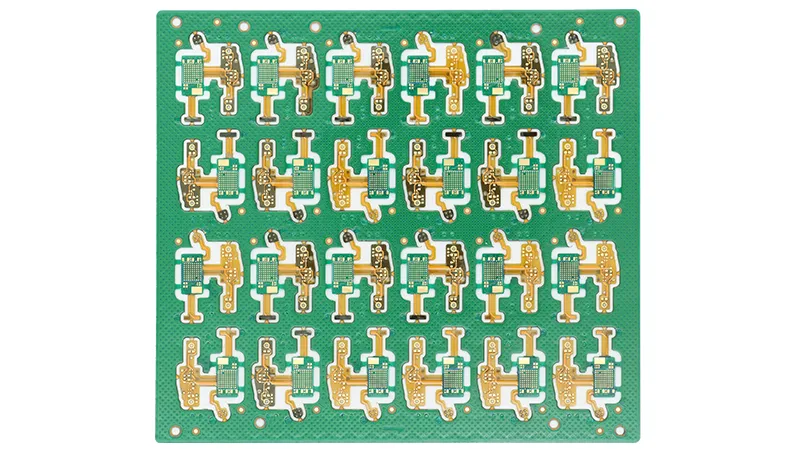
⚙️ Limitations of Traditional Depaneling Methods
Before adopting laser solutions, manufacturers often rely on:
- Router cutting
- Punching
- Manual separation
These methods work for rigid boards.
But with flex and rigid-flex, they introduce risks:
- Mechanical stress causes deformation
- Tool pressure is damaging thin layers
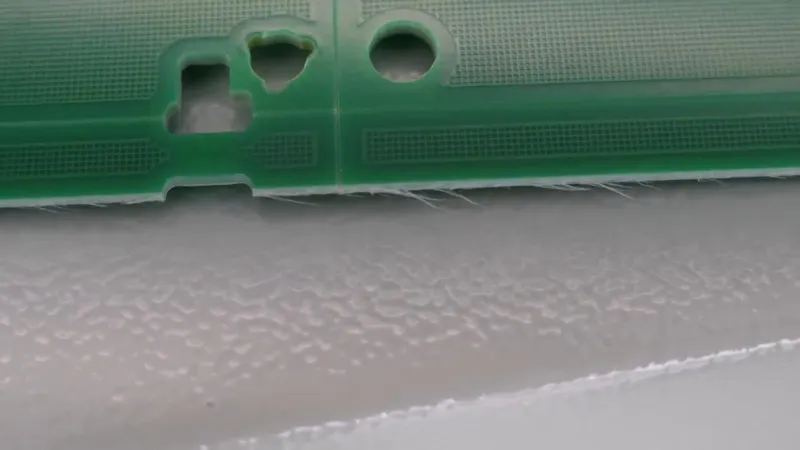
- Poor edge quality in soft materials
Inconsistent results are common.
Especially in high-volume production.
⚡ What Makes Laser Depaneling Different
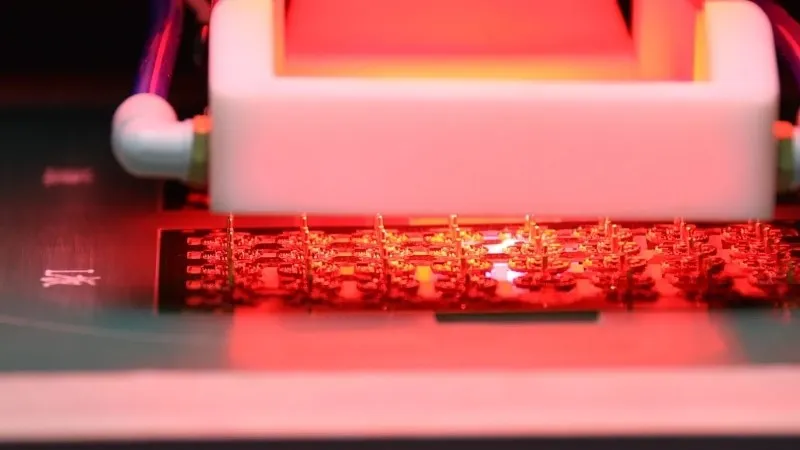
Laser PCB depaneling is a non-contact process.
No blades.
No mechanical pressure.
That changes the outcome.
Key advantages include:
- Minimal stress on flexible materials
- High precision for intricate designs
- Clean edges without fraying
- Ability to handle complex contours
For flex and rigid-flex PCBs, this is often the difference between stable yield and repeated issues.
📊 Laser vs Traditional Methods for Flex PCBs
Here’s a practical comparison:
| Method | Stress Level | Edge Quality | Suitability for Flex PCBs |
|---|---|---|---|
| Laser | Very Low | Excellent | Ideal |
| Router | Low-Medium | Good | Limited (risk of deformation) |
| Punching | Medium | Moderate | Not recommended |
| Manual | High | Inconsistent | High risk |
Laser stands out when material sensitivity is high.
💥 Common Pain Points in Flex PCB Production
From real production environments, typical issues include:
- Edge tearing or fraying
- Delamination between layers
- Warping after depaneling
- Low yield due to inconsistent cuts
These problems often appear unpredictable.
But they are process-related.
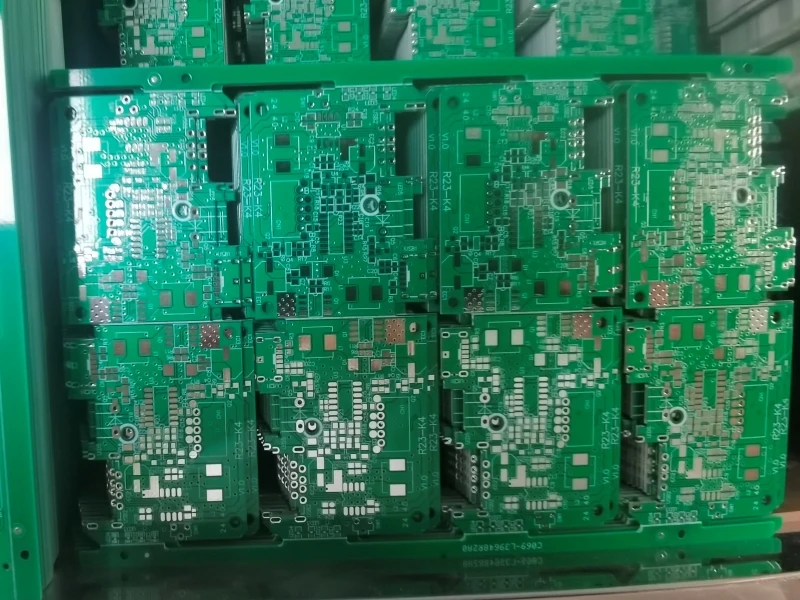
🧩 Design Considerations That Help
Even with the right equipment, design matters.
Helpful practices include:
- Defining clear-cutting paths
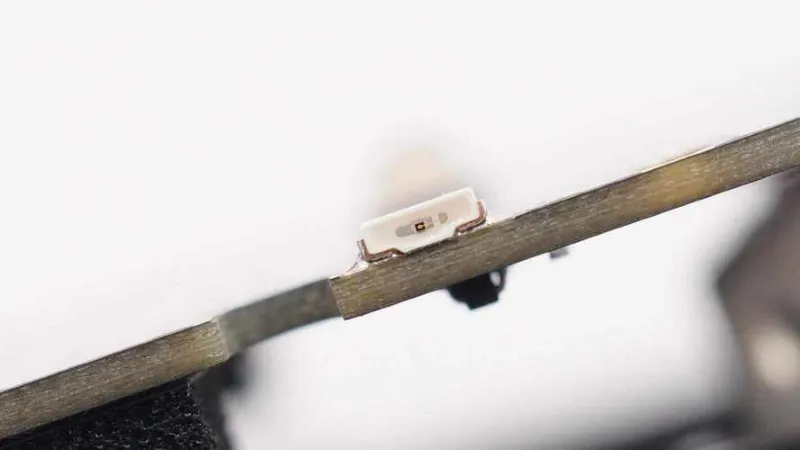
- Avoiding critical traces near edges
- Reinforcing areas near separation lines
- Considering panel layout for stability
Good design supports better processing.
🛠️ Process Optimization for Laser Depaneling
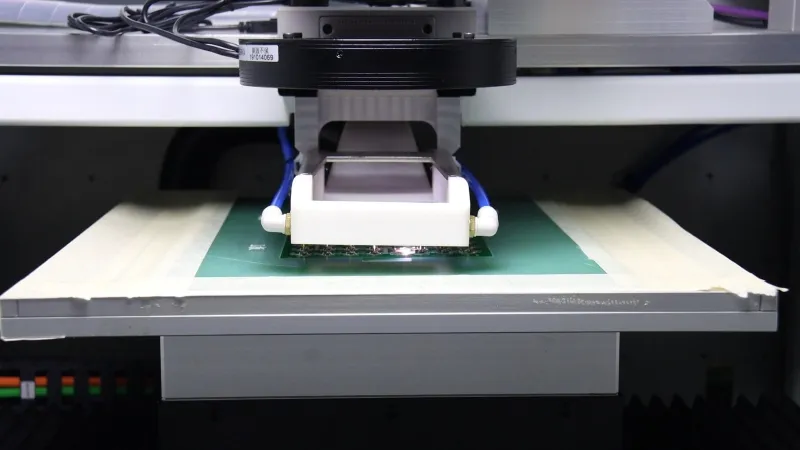
Laser systems also require proper setup.
Key parameters include:
- Laser power
- Cutting speed
- Focus accuracy
- Material-specific settings
Optimization ensures:
- Clean cuts
- Minimal thermal impact
- Consistent quality
Attention to detail is essential.
🧪 Case Study — Improving Yield in Rigid-Flex Production
A manufacturer producing wearable device PCBs faced ongoing issues:
- Edge deformation during router cutting
- Delamination in bending areas
- High rejection rates
They partnered with SEEZM-TEC to transition to laser PCB depaneling.
After implementation:
- Edge quality improved significantly
- Delamination issues were reduced
- Yield increased
The non-contact process eliminated the main source of mechanical stress.
💰 Cost vs Performance Consideration
Laser systems involve a higher initial investment.
But for flex and rigid-flex PCBs, consider:
- Reduced scrap rates
- Lower rework costs
- Improved product reliability
- Better consistency in mass production
In many cases, the long-term benefits outweigh the upfront cost.
🔄 When to Choose Laser Depaneling
Laser PCB depaneling is the preferred choice when:
- Working with thin or flexible materials
- Handling rigid-flex structures
- Requiring high precision cuts
- Avoiding mechanical stress is critical
For rigid-only boards, other methods may still be viable.
But for flex applications, laser often becomes the standard.
🚀 Future Trends in Flex PCB Depaneling
As devices become smaller and more complex:
- Flex PCB usage is increasing
- Design complexity is rising
- Tolerance requirements are tightening
Laser depaneling is expected to play a larger role.
Especially in wearable, medical, and automotive electronics.
🚀 Why Choose SEEZM-TEC?
SEEZM-TEC focuses on delivering depaneling solutions that meet the unique challenges of flexible and rigid-flex PCB manufacturing.
SEEZM-TEC has been dedicated to PCB/FPC depaneling technology, providing a full range of solutions — including milling cutter depanelers, laser depanelers, V-groove depanelers, punching depanelers, and automated handling systems.
Their equipment is trusted by leading global manufacturers such as Foxconn, Flextronics, State Grid, Luxshare, Compal, Wistron, China Electronics, Quanta, CRRC, China Aerospace, OPPO, ZTE, and Bosch. These collaborations demonstrate proven performance across high-precision and large-scale production environments.
With strong expertise in handling sensitive materials, SEEZM-TEC helps manufacturers achieve stable quality and high yield in flex and rigid-flex PCB production.
If you are exploring depaneling solutions for flexible or rigid-flex PCBs, feel free to contact us.
WhatsApp: +8618929266433
E-mail: sales@seprays.com
❓ FAQ
1. Why is laser depaneling suitable for flexible PCBs?
Because it is non-contact and minimizes mechanical stress on thin materials.
2. Can router depaneling be used for rigid-flex boards?
It can, but there is a higher risk of deformation and damage.
3. Does laser cutting cause thermal damage?
When properly optimized, thermal impact is minimal and controlled.
4. Is laser depaneling cost-effective?
For high-value or sensitive PCBs, it often reduces overall production cost.
5. What industries benefit most from flex PCB laser depaneling?
Wearables, medical devices, and automotive electronics are key users.